Ford

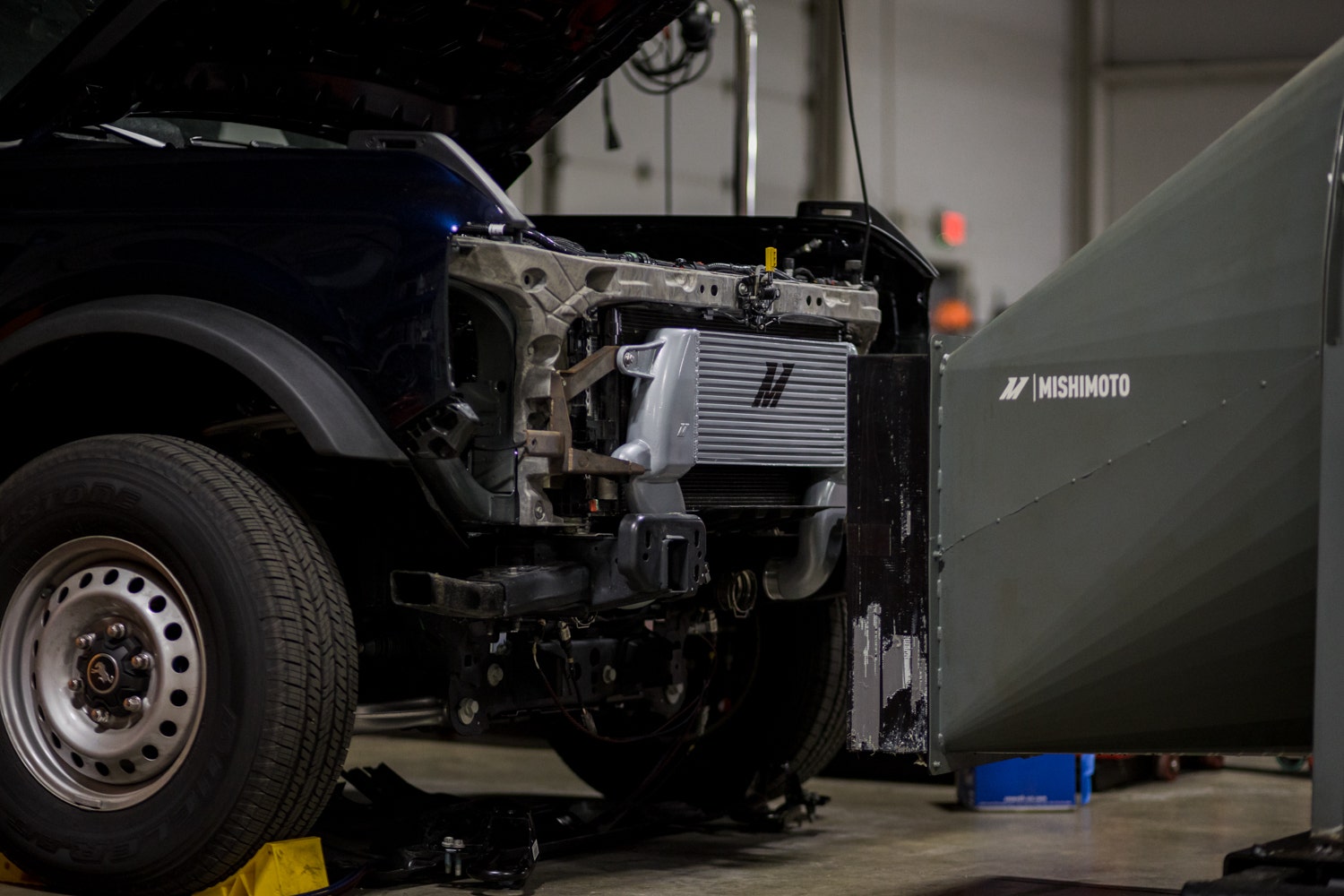
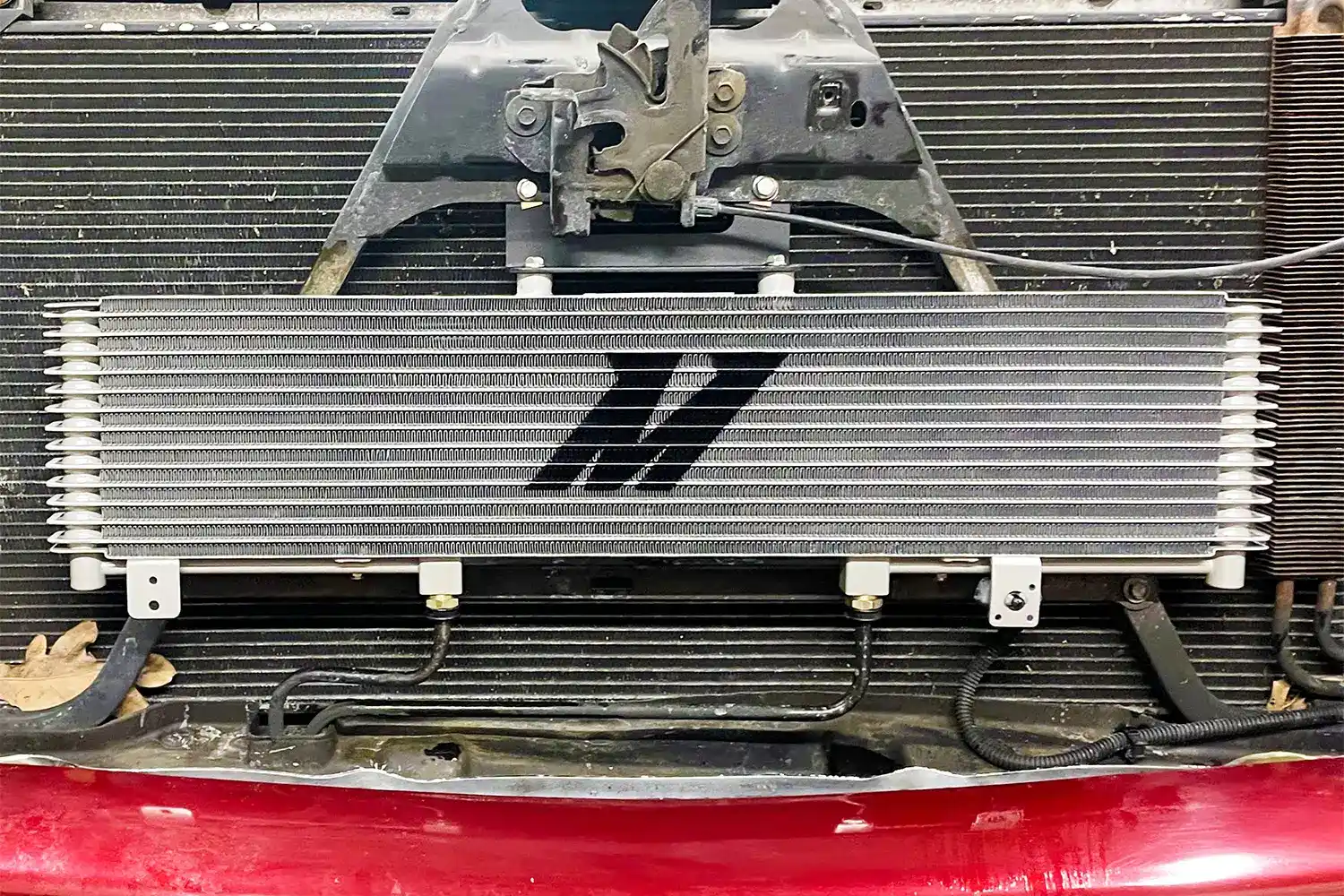
  1. An image of a Ford F250 Super-Duty with the grille removed and a Mishimoto transmission cooler installed in front of the radiator.

    Hard Lines, Hard Work – Transmission Cooler for the 2020-2022 Ford 6.7L Powerstroke

    With 475 horsepower and 1,050 ft-lbs routed through a 10-speed 10R140 TorqShift transmission, the 2020-2022 Ford 6.7L Powerstroke was designed for serious towing. With big power comes lots of heat, and this is especially true when hauling heavy loads or towing uphill. As impressive as this truck is, heat is the enemy of any transmission, and as temperatures rise, so do problems.


    The stock transmission cooler does a decent job of cooling, but if you’re looking to push this truck to the limit, decent won’t do. That’s why we’ve been hard at work developing the Mishimoto Transmission Cooler for the 2020-2022 Ford 6.7L Powerstroke—the first of its kind on the market.

    Stock Evaluation

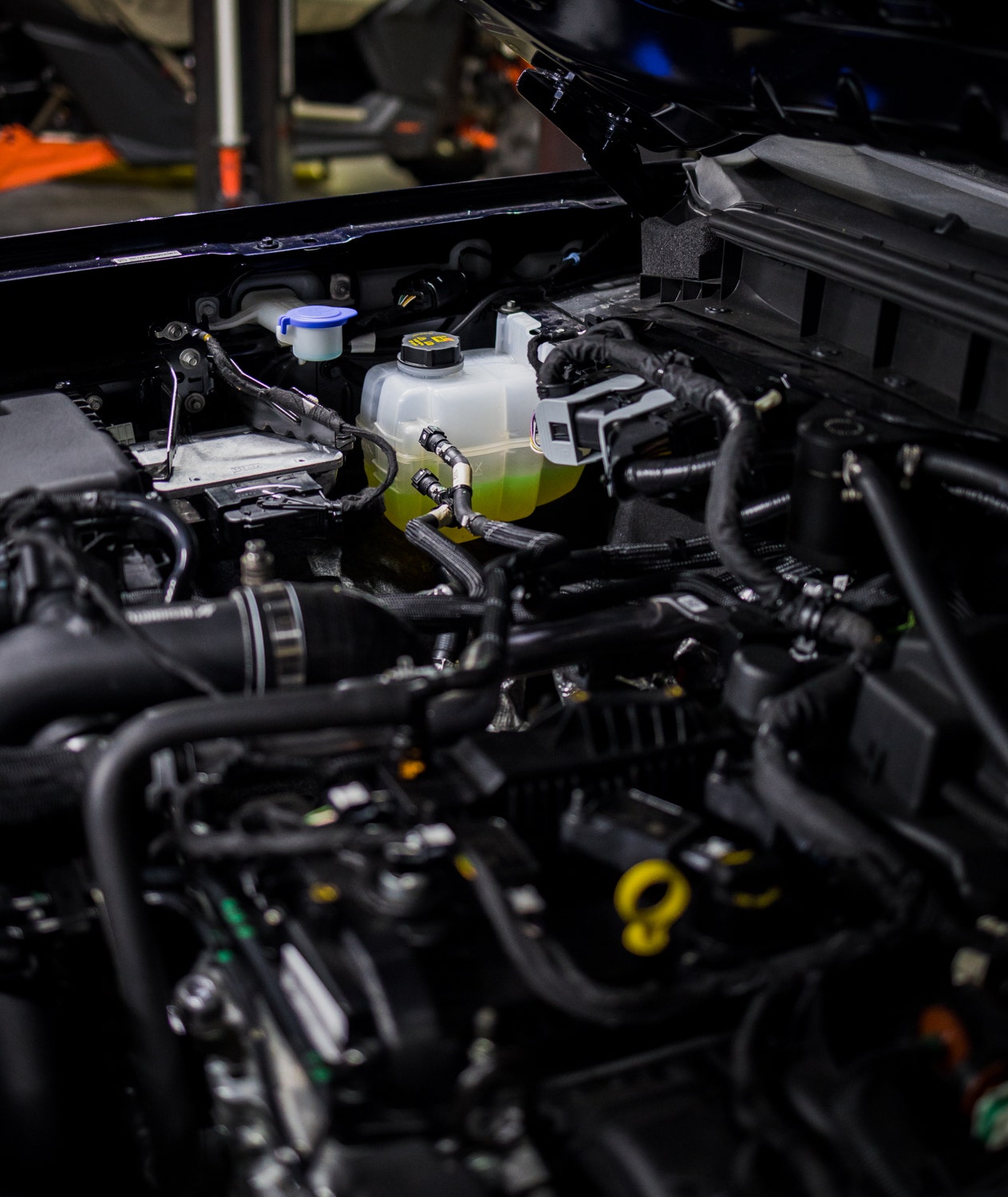
    The engine bay of a Ford F-250 Super Duty 6.7L Powerstroke with the hood open. Just out of frame there is a blue Ford Mustang to the left and black Ford Mustang GT to the right.

    The stock transmission cooler uses a liquid-to-liquid design. This works by transferring heat from the transmission to the engine coolant. This style of transmission cooler is becoming more commonly equipped by OEMs due to their compact size, but there are pros and cons.

    Typically, liquid-to-liquid transmission

    Continue Reading »
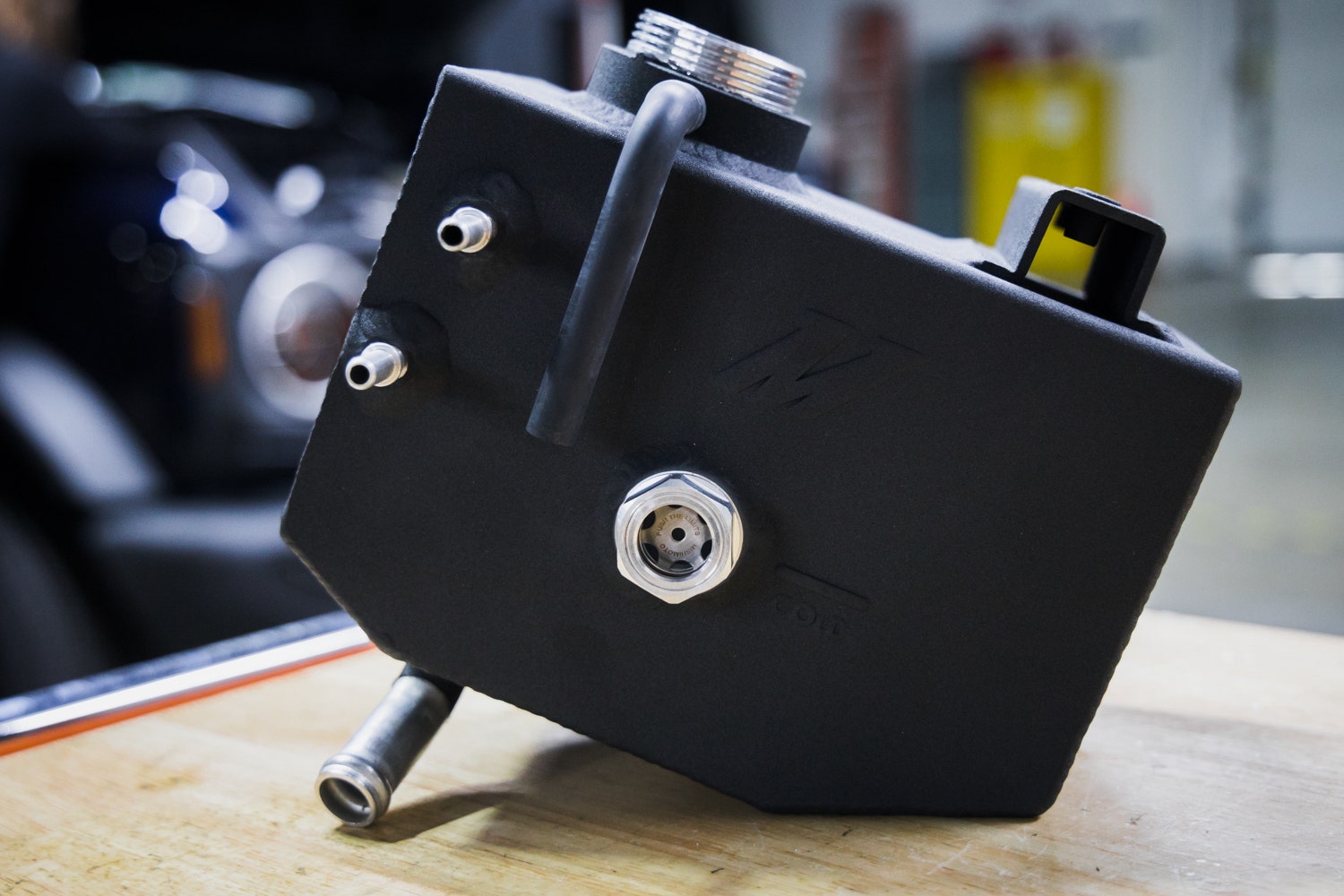
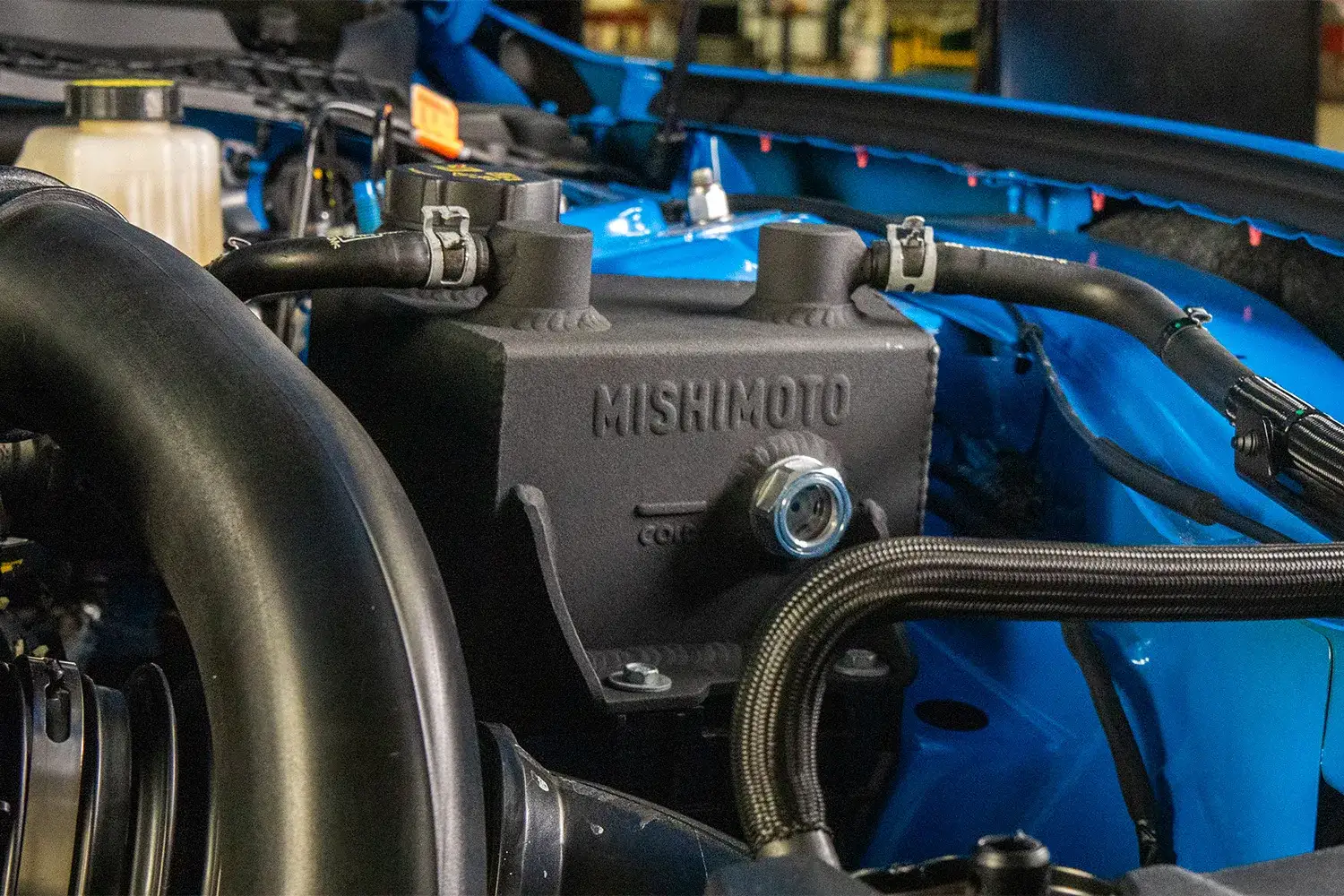
  2. Image of the Mishimoto Aluminum Coolant Expansion Tank installed in the engine bay of a 2024+ Ford Mustang EcoBoost

    Cool & Collected – Aluminum Coolant Expansion Tank for the 2024+ Ford Mustang

    Every owner of a performance vehicle knows the importance of keeping their car running cool, but not everyone knows where to start when it comes to upgrading their cooling system. For owners of the 2024+ Ford Mustang looking to take the next step in performance and reliability for their car’s cooling system, it’s best to start with the basics—the coolant expansion tank.

    The stock coolant expansion tank on the 2024+ Ford Mustang leaves a lot to be desired. The plastic construction isn’t just an eyesore, it’s not designed to stand the test of time. After repeated heat cycles the plastic yellows and becomes brittle, leading to a higher risk of cracking and coolant leakage. This risk only increases when the vehicle is driven hard, such as fast laps at the track or hard pulls on the dragstrip.

    An image of the stock coolant reservoir on the 2024 Ford Mustang.
    Figure 1. The stock coolant reservoir on the 2024 Ford Mustang.

    Thankfully, we have a solution for Mustang owners out there.

    The direct-fit Mishimoto Coolant Expansion Tank for the 2024+ Ford Mustang features

    Continue Reading »
  3. Road Test Results – Baffled Oil Catch Can for 2024+ Mustang V8

    Road Test Results – Baffled Oil Catch Can for 2024+ Mustang V8

    We’re entering the fourteenth year of production for Ford’s 5.0L Coyote V8 engine, and in that time the Coyote has made a name for itself. It’s a powerful, throaty engine that’s been in the Mustang GT since the 2011 model year. Since its inception, the folks at Ford have managed to squeeze an extra 68 horsepower out of the Coyote with the new 2024 Mustang GT boasting 480 horsepower. Despite these gains, one issue the Coyote has had for years still persists—excessive blow-by.

    What is Blow-by?

    If you’re not familiar, blow-by is a result of high pressure on the top side of the piston pushing combustion gasses, as well as droplets of oil and fuel, past the piston rings and into the crankcase. To prevent excessive pressure in the crankcase, most modern vehicles extract blow-by via the PCV system and route it back into the intake. While most manufacturers add an air-oil separator to the PCV system, they often aren't as effective at removing oil as we might like. This leads to the problem of oil

    Continue Reading »
  4. Shock Value – 2021+ Ford Bronco Rear Shock Skid Plate R&D – Concept to Completion

    Shock Value – 2021+ Ford Bronco Rear Shock Skid Plate R&D – Concept to Completion

    What makes for a successful off-roader? Sure, a powerplant sending loads of low-end grunt to all four grippy all-terrain tires combined with a high-rising and flexible suspension are all essential to the success of any overlander, but that’s not necessarily the secret sauce. Durability is the key. Nothing spoils the euphoria of cruising through gorgeous landscapes in your Bronco, quite like a trail obstacle jumping out and viciously assaulting your undercarriage. While most of the critical bits under your Bronco are already well protected, the rear suspension is still left defenseless against the menacing wilderness. Well, defenseless until now.

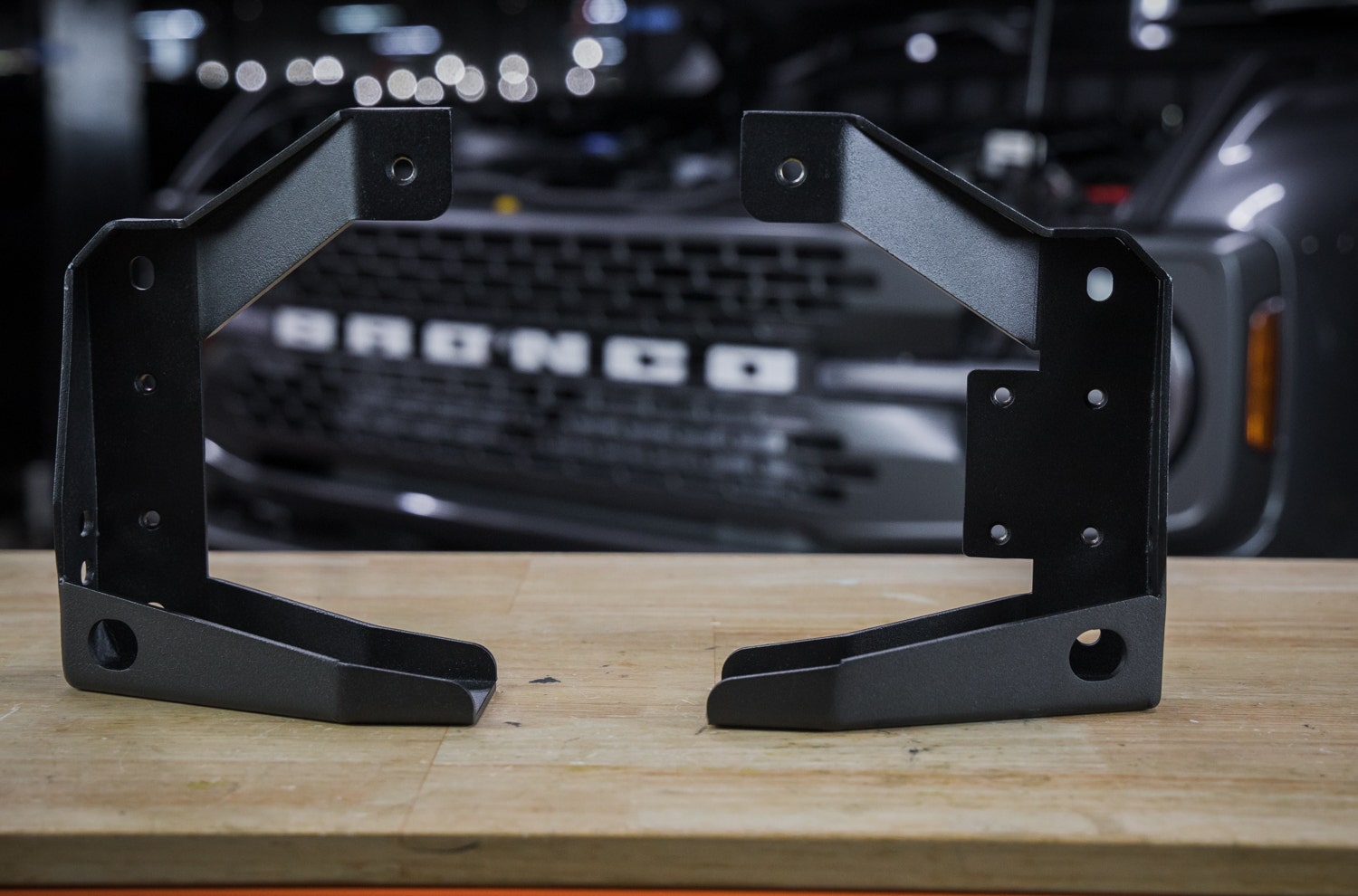
    Enter Anthony, our man with a plan to keep these rear shocks both properly attached to the Bronco and relatively unscathed for many more off-road expeditions. That plan, simply put, is to give these shocks the armor they deserve. As simple as that sounds, our engineer’s design features some complexity ideal for keeping the suspension safe.

    With
    Continue Reading »
  5. Metal Makeover – 2021+ Ford Bronco 2.3L/2.7L Aluminum Coolant Expansion Tank – Concept to Completion

    Metal Makeover – 2021+ Ford Bronco 2.3L/2.7L Aluminum Coolant Expansion Tank – Concept to Completion

    It’s no secret that the Bronco is a capable off-roader right off Ford’s assembly line. During its absence from the roads and trails, Ford bolstered both the platform and the available options to solidify the Bronco at the top of the off-roading food chain. While any Bronco option is a strong choice, these vehicles are only as strong as their weakest link. In this case, the chink in the Bronco’s armor comes from the coolant expansion tank, but we already have a solution.

    Tucked in the back corner of the engine bay, Ford’s OEM design stays out of harm’s way in terms of trail hazards, save one – heat. From the factory, these expansion tanks result from seeking a middle ground between durability and reducing production costs, typically plastic. Now, plastic has come a long way over the years, but these tanks still suffer degradation at the hands of repeated heating cycles, with the Achilles heel lying at the plastic welded seam that runs directly through the center of Ford’s design. While it’s

    Continue Reading »
  6. Pipeline – 2021+ Ford Bronco 2.3L Performance Intercooler Pipe Kit R&D, Part 4 – Performance Testing

    Pipeline – 2021+ Ford Bronco 2.3L Performance Intercooler Pipe Kit R&D, Part 4 – Performance Testing

    Updating infrastructure is all about preparing for the future. We, as a society, are constantly expanding highways, power grids, and server rooms to prepare for increased bandwidth usage. The story is the same under the hood of any turbocharged vehicle since most enthusiasts are plotting to turn up the boost. The construction of our charged air corridor might have only started back in the spring, but we’re finally ready to open this new high-pressure highway.

    Additional volume is essential for tuning turbocharged applications. With the impending wave of oncoming boost, we needed to ensure that the piping system would be equipped to handle everything a performance tune could throw at them. In our last post we covered our inner diameter size increases upwards of 110% over the stock piping, and now we wanted to see how that equates in terms of performance.

    This big blue box houses an array of air pumps and precise measuring tools that help us pinpoint the differences in flow performance between

    Continue Reading »
  7. Pipeline – 2021+ Ford Bronco 2.3L Performance Intercooler Pipe Kit R&D, Part 3 – Production Sample

    Pipeline – 2021+ Ford Bronco 2.3L Performance Intercooler Pipe Kit R&D, Part 3 – Production Sample

    There’s nothing quite as satisfying as reaping the benefits of a carefully calculated plan coming together. While enhancing a few pipes under the 2.3L powered Bronco might not seem like much of an undertaking, even the minor steps in any build require plenty of planning. We’re almost ready to see how much more bandwidth our piping system can handle, but first, we wanted to show off the fruits of our careful consideration. 

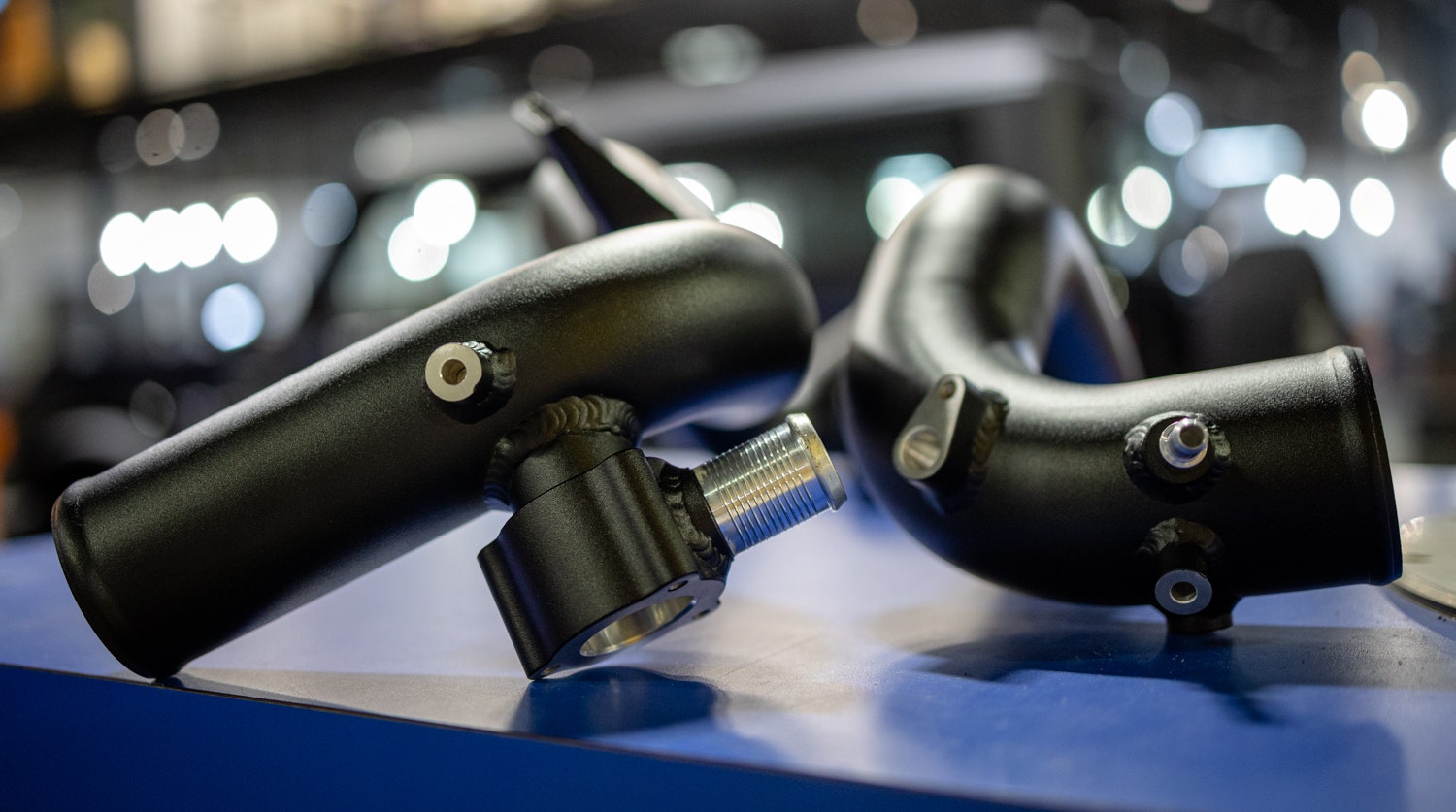
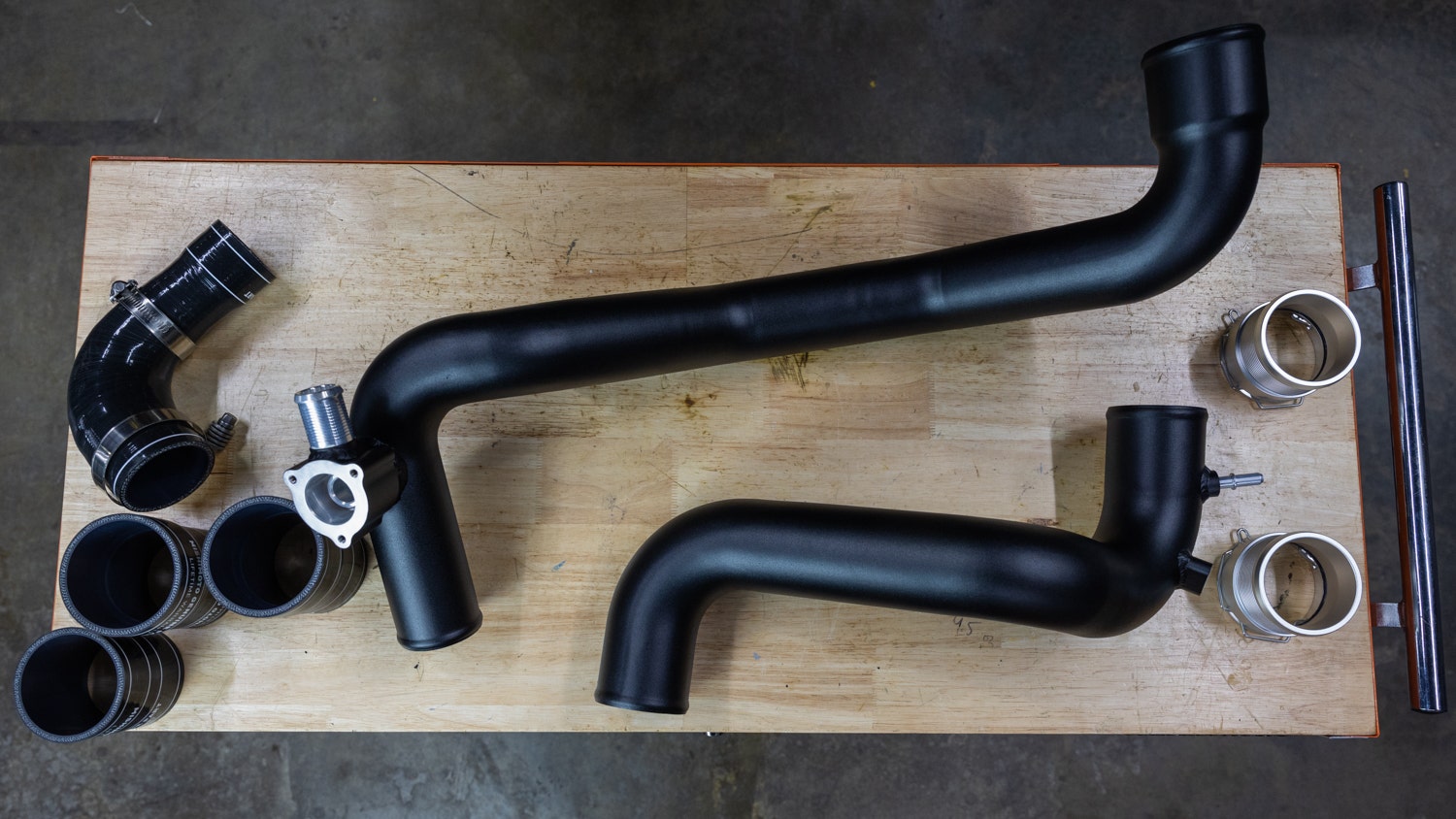
    Last seen in their 3D printed plastic prototype form, our design has finally fully metamorphosized to complete their full aluminum carapace. Even with size increases up to 110%, our new pipes retain a snug OEM fit thanks to our careful sculpting. We’ve also added the option of a slick, micro-wrinkle black or polished finish to keep these pipes looking fresh no matter what terrain you’re trudging through.

    As handsome as these new pipes are, they’re just fancy paperweights without the proper means of integrating into the intercooling system. So the first step of simplifying

    Continue Reading »
  8. High Road – 2021+ Ford Bronco Performance Intercooler R&D, Part 7 – 2.7L Dyno Testing

    High Road – 2021+ Ford Bronco Performance Intercooler R&D, Part 7 – 2.7L Dyno Testing

    The 2.7L Bronco is a true adventure machine. No matter the trim or configuration, these twin-turbo V6-powered Broncos are determined to get you to any destination, no matter what’s in their way. Well, for the most part. Unfortunately, the intercooler keeping the charged air from those turbos cool isn’t exactly up to the task, and it’s in the way of more pertinent off-roading gear. So, to retain the 2.7L’s sheer determination, we had some better ideas for the intercooler, and now it’s time to see how they perform. 

    In our last post, our 2.3L powered Base model, aka Pedro, was taking point through the tribulations of dyno testing, with our 2.7L following close behind. While these Broncos are headed to the same destination, their route is slightly different. Specifically, where our manual shifting 2.3L used the path of the DynaPacks, our 10-speed automatic equipped 2.7L found its way to our DynoJet system. So while these dynos operate differently, we still perform the same gambit of testing

    Continue Reading »
  9. High Road – 2021+ Ford Bronco Performance Intercooler R&D, Part 6 – 2.3L Dyno Testing

    High Road – 2021+ Ford Bronco Performance Intercooler R&D, Part 6 – 2.3L Dyno Testing

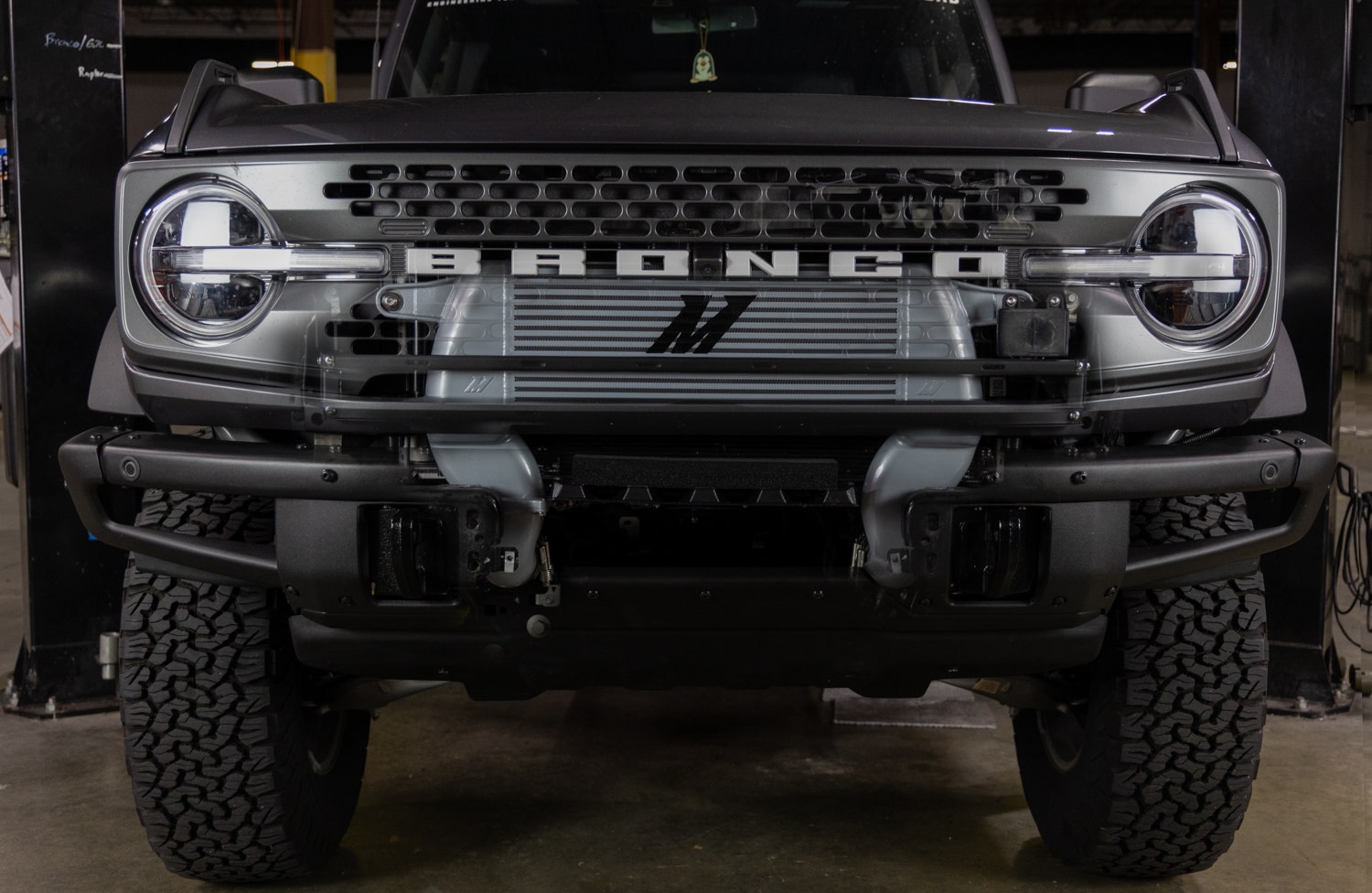
    The engineers at Ford developed their latest and greatest Bronco for the high road, but the intercooler used across the lineup wasn’t quite up to the task of wilderness exploration. Plus, we can think of plenty of better uses for the OEM intercooler’s mounting location. So we told the OEM intercooler to take a hike and took our new design to the high road. It’s been a long journey getting to the trailhead, but we’re finally ready to start our dyno journey with our plucky 2.3L-powered Pedro taking point. 

    Our trip to the dyno brings us to our DynaPack system since the 7-speed manual plays nice with this kit. Locked into its RWD drive configuration and ready for torture testing, we started with our single power pulls. These tests hone into the primary aspects of our design that we’re looking to compare. The first is the primary reason for upgrading your intercooler, heat dissipation. For this round of testing, we slot our Bronco into 4th gear, which is closest to a 1:1 gear ratio, and sweep

    Continue Reading »
  10. High Road – 2021+ Ford Bronco Performance Intercooler R&D, Part 5 – Production Sample Ducting

    High Road – 2021+ Ford Bronco Performance Intercooler R&D, Part 5 – Production Sample Ducting

    When it comes to keeping charged air temperatures in check, the intercooler is only as good as its air source. The core’s size and the end tanks’ shape almost become irrelevant if no reliable source of fresh air passes through the fins. Intercooling is a team effort, and while the core may be the star of the show, it’s nothing without the rest of the crew. In the last post, we covered the literal supporting cast, but now it’s time to introduce the ducting. 

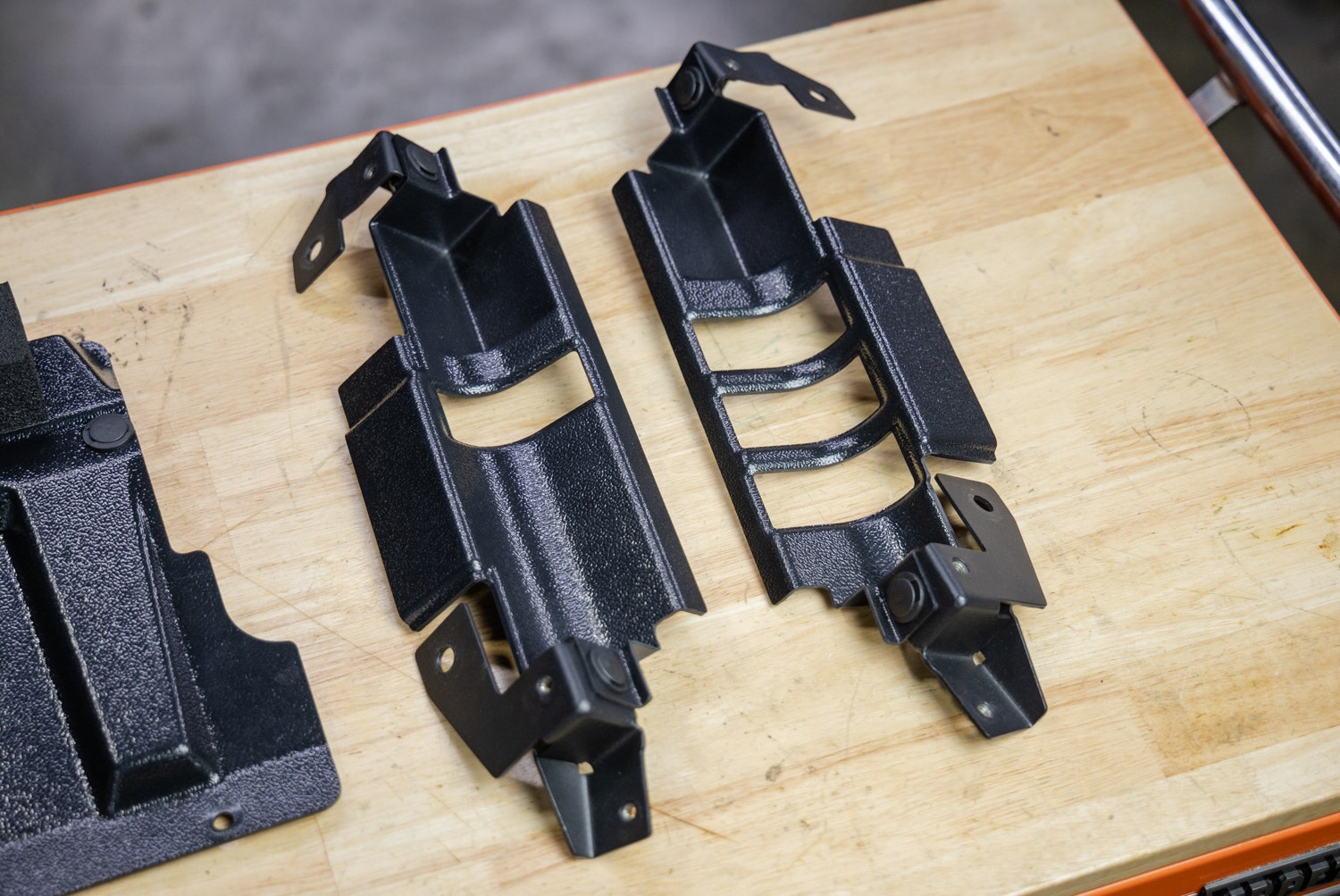
    From the factory, these Broncos roll off the line with a plethora of perfectly sculpted ducting that’s purpose-built for force-feeding air straight through the Bronco’s intercooler core. The trouble is that the intercooler isn’t in that location anymore. So, to keep this stream of air flowing through our new core, we also developed our own ducting to guide this incoming air through the fins properly. 

    Now, the new location is in a much more direct path of fresh air since it’s slid up to join the rest of the cooling stack, but without

    Continue Reading »