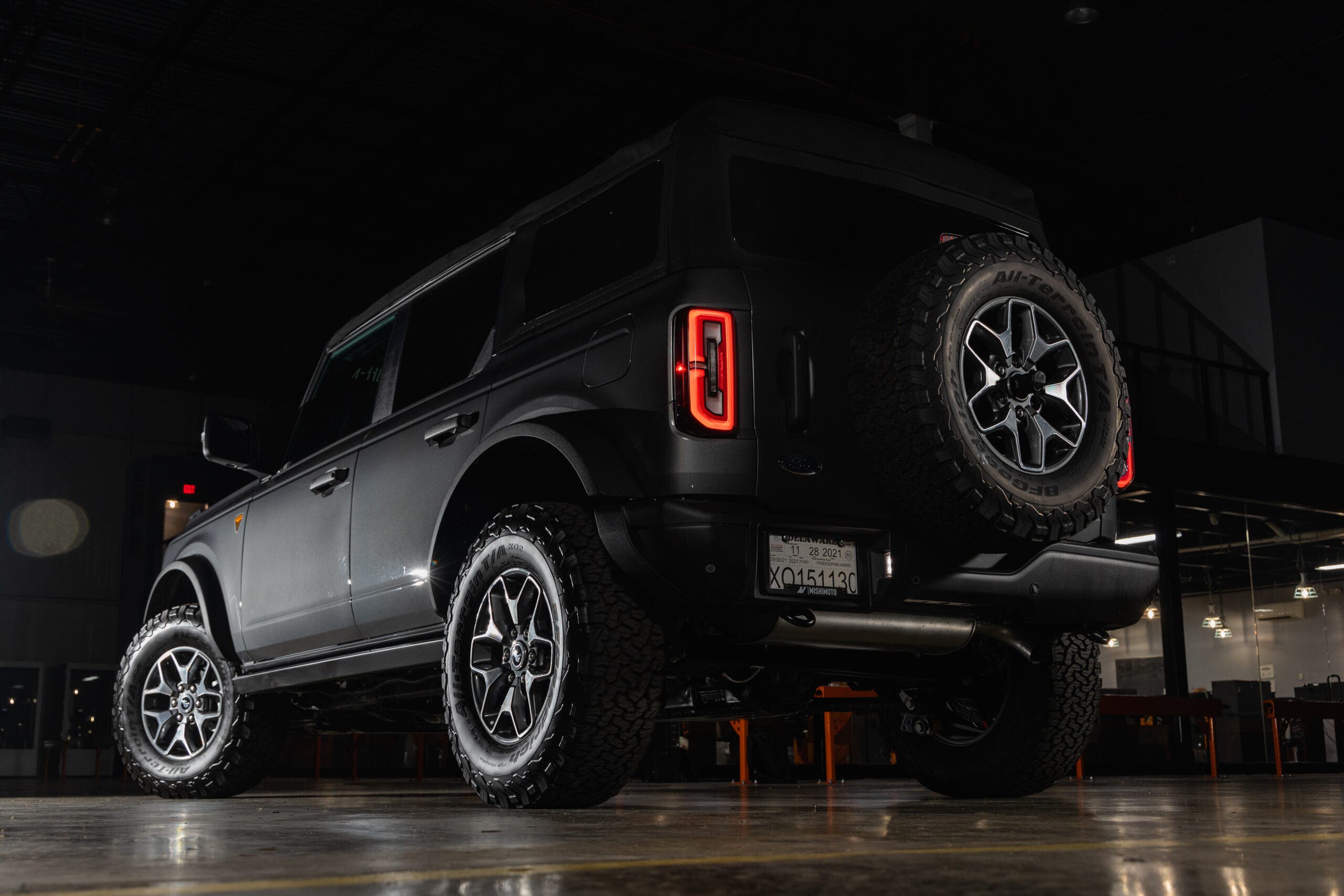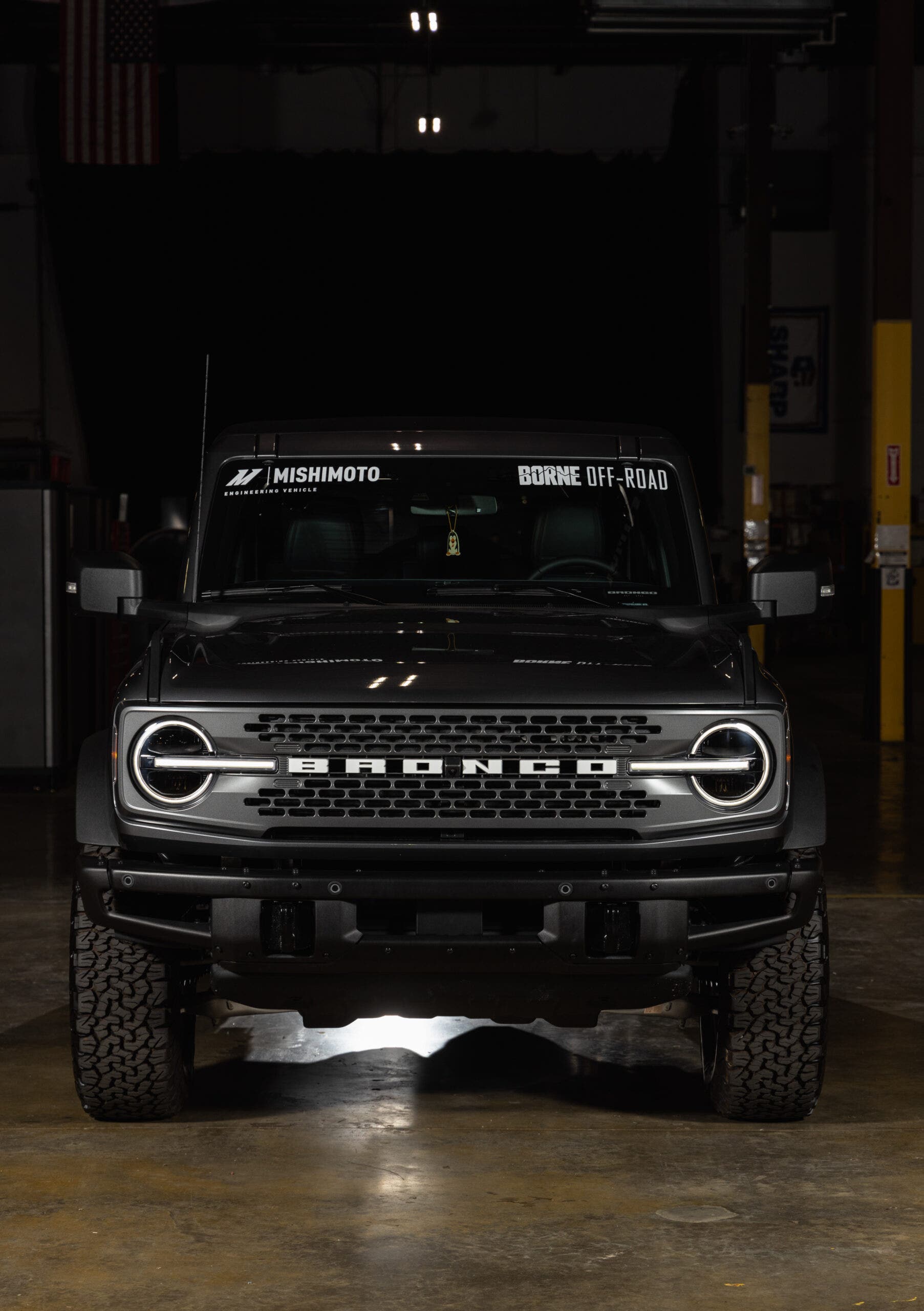
The 2.7L Bronco is a true adventure machine. No matter the trim or configuration, these twin-turbo V6-powered Broncos are determined to get you to any destination, no matter what’s in their way. Well, for the most part. Unfortunately, the intercooler keeping the charged air from those turbos cool isn’t exactly up to the task, and it’s in the way of more pertinent off-roading gear. So, to retain the 2.7L’s sheer determination, we had some better ideas for the intercooler, and now it’s time to see how they perform.
In our last post, our 2.3L powered Base model, aka Pedro, was taking point through the tribulations of dyno testing, with our 2.7L following close behind. While these Broncos are headed to the same destination, their route is slightly different. Specifically, where our manual shifting 2.3L used the path of the DynaPacks, our 10-speed automatic equipped 2.7L found its way to our DynoJet system. So while these dynos operate differently, we still perform the same gambit of testing
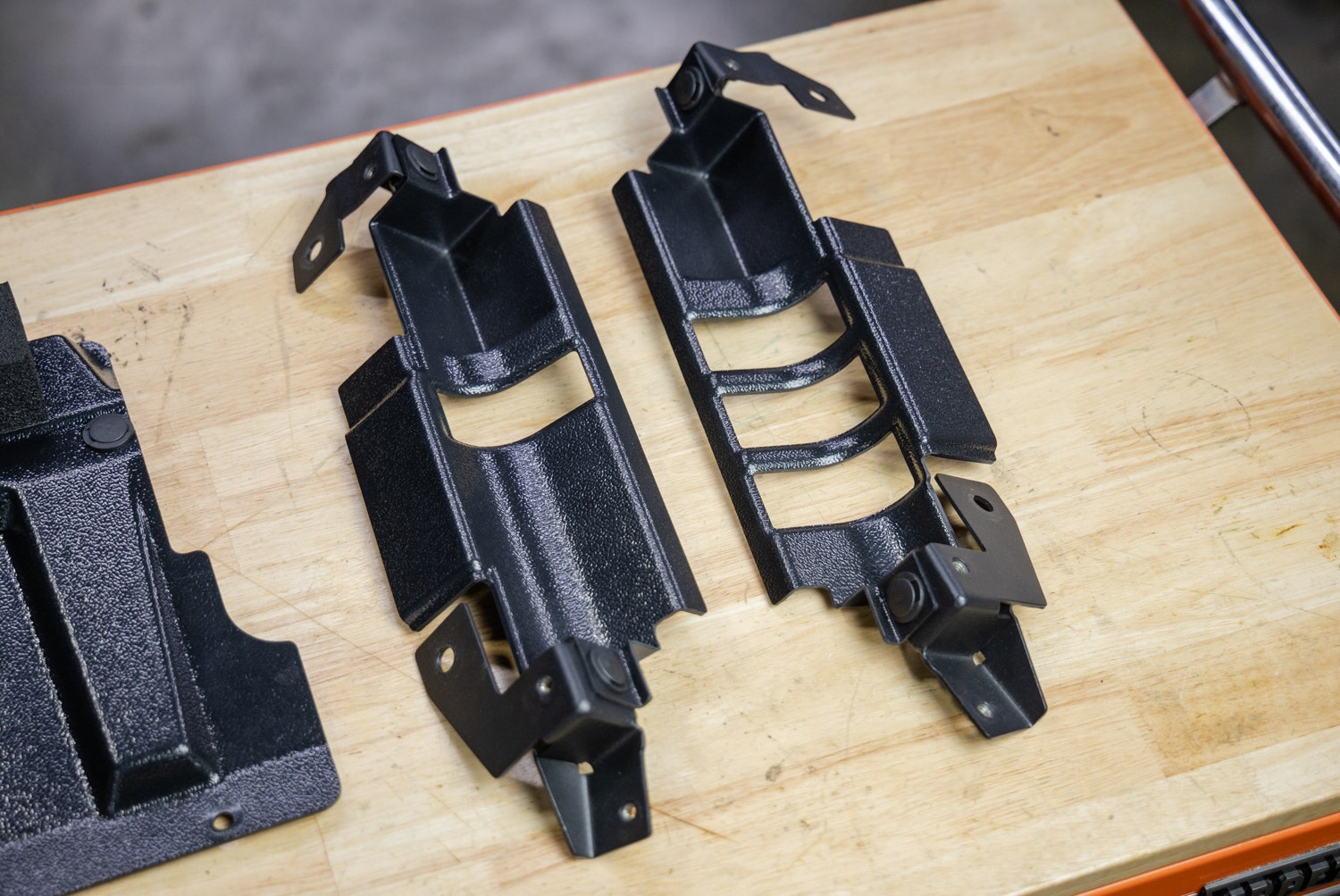
When it comes to keeping charged air temperatures in check, the intercooler is only as good as its air source. The core’s size and the end tanks’ shape almost become irrelevant if no reliable source of fresh air passes through the fins. Intercooling is a team effort, and while the core may be the star of the show, it’s nothing without the rest of the crew. In the last post, we covered the literal supporting cast, but now it’s time to introduce the ducting.
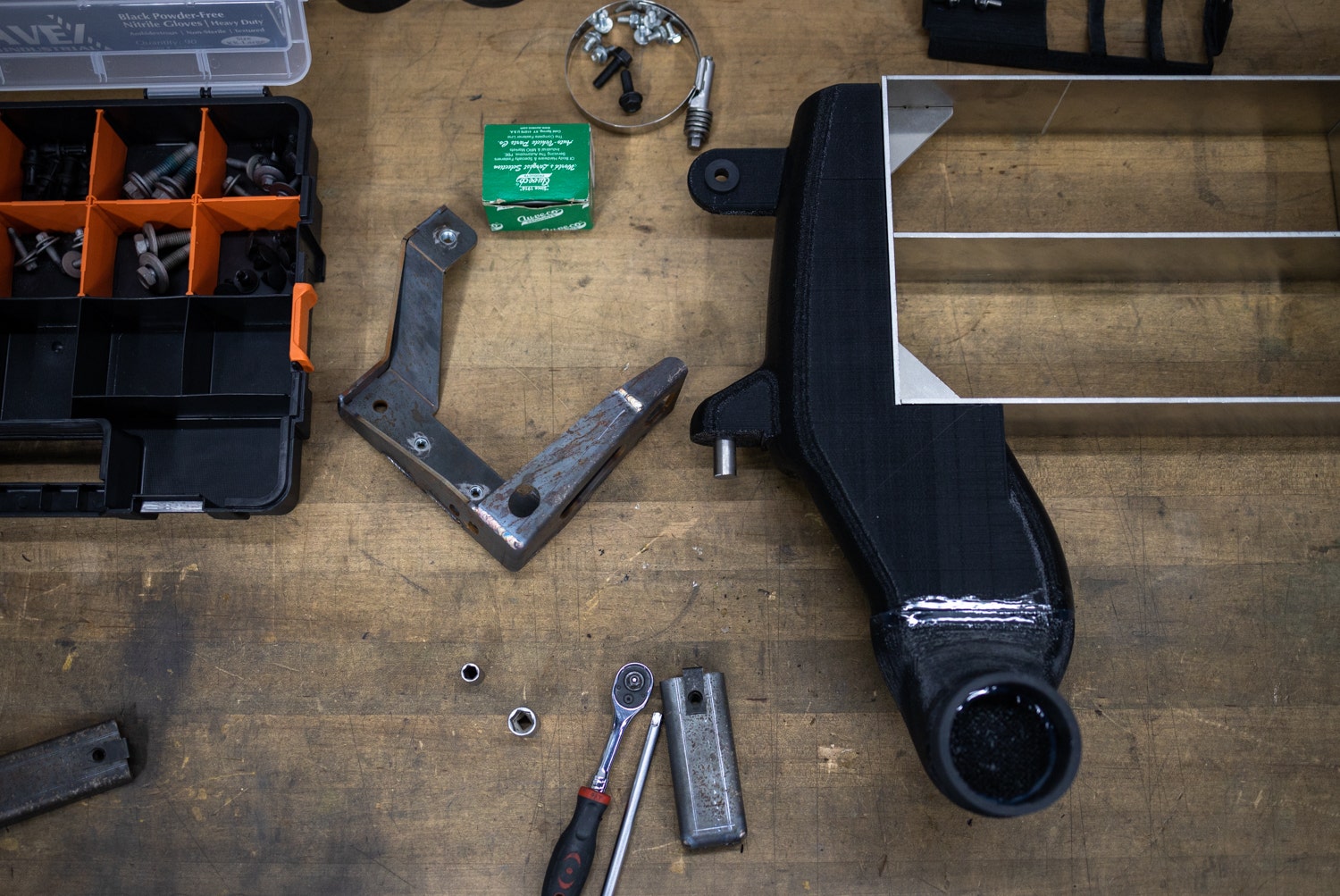
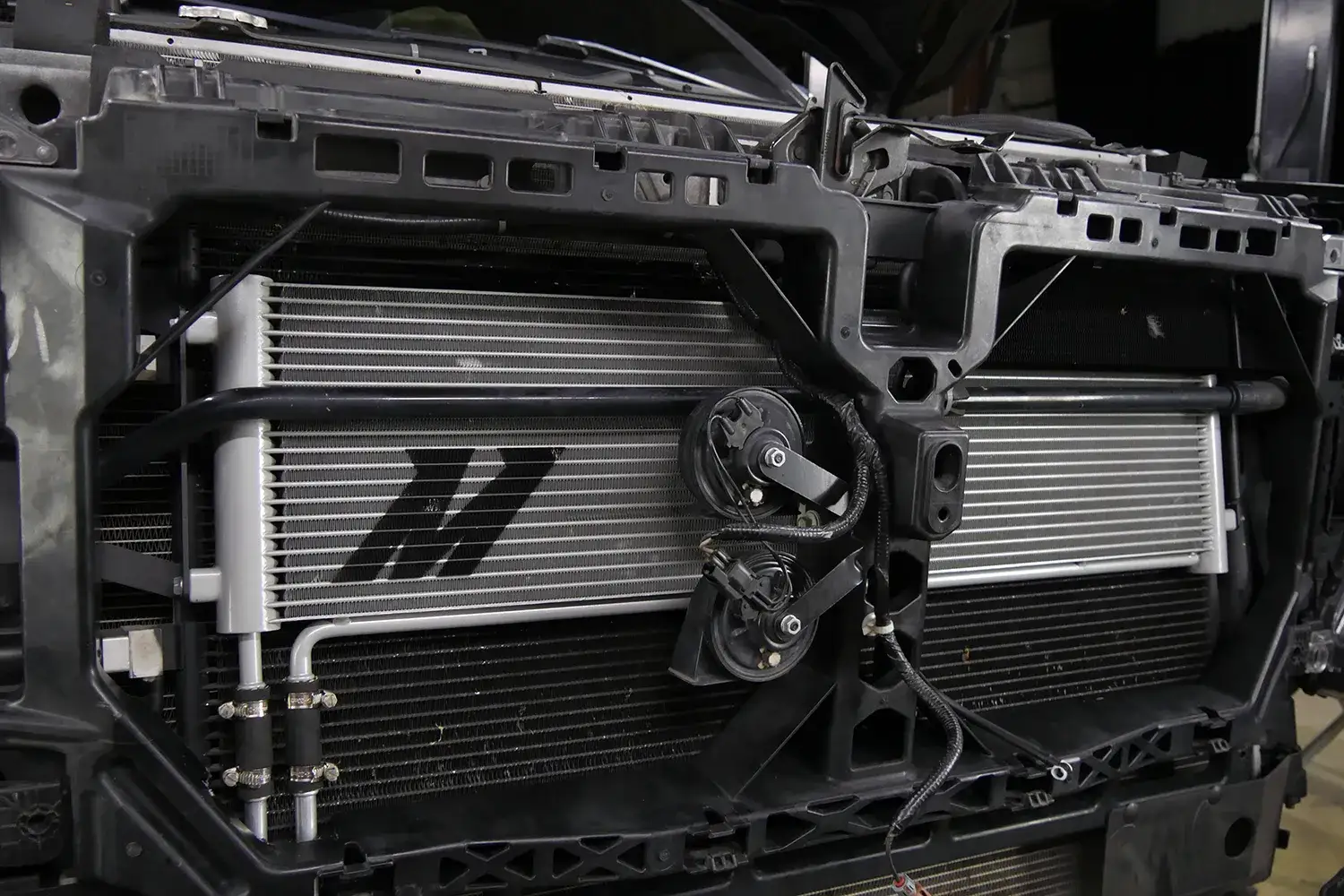
From the factory, these Broncos roll off the line with a plethora of perfectly sculpted ducting that’s purpose-built for force-feeding air straight through the Bronco’s intercooler core. The trouble is that the intercooler isn’t in that location anymore. So, to keep this stream of air flowing through our new core, we also developed our own ducting to guide this incoming air through the fins properly.
Now, the new location is in a much more direct path of fresh air since it’s slid up to join the rest of the cooling stack, but without
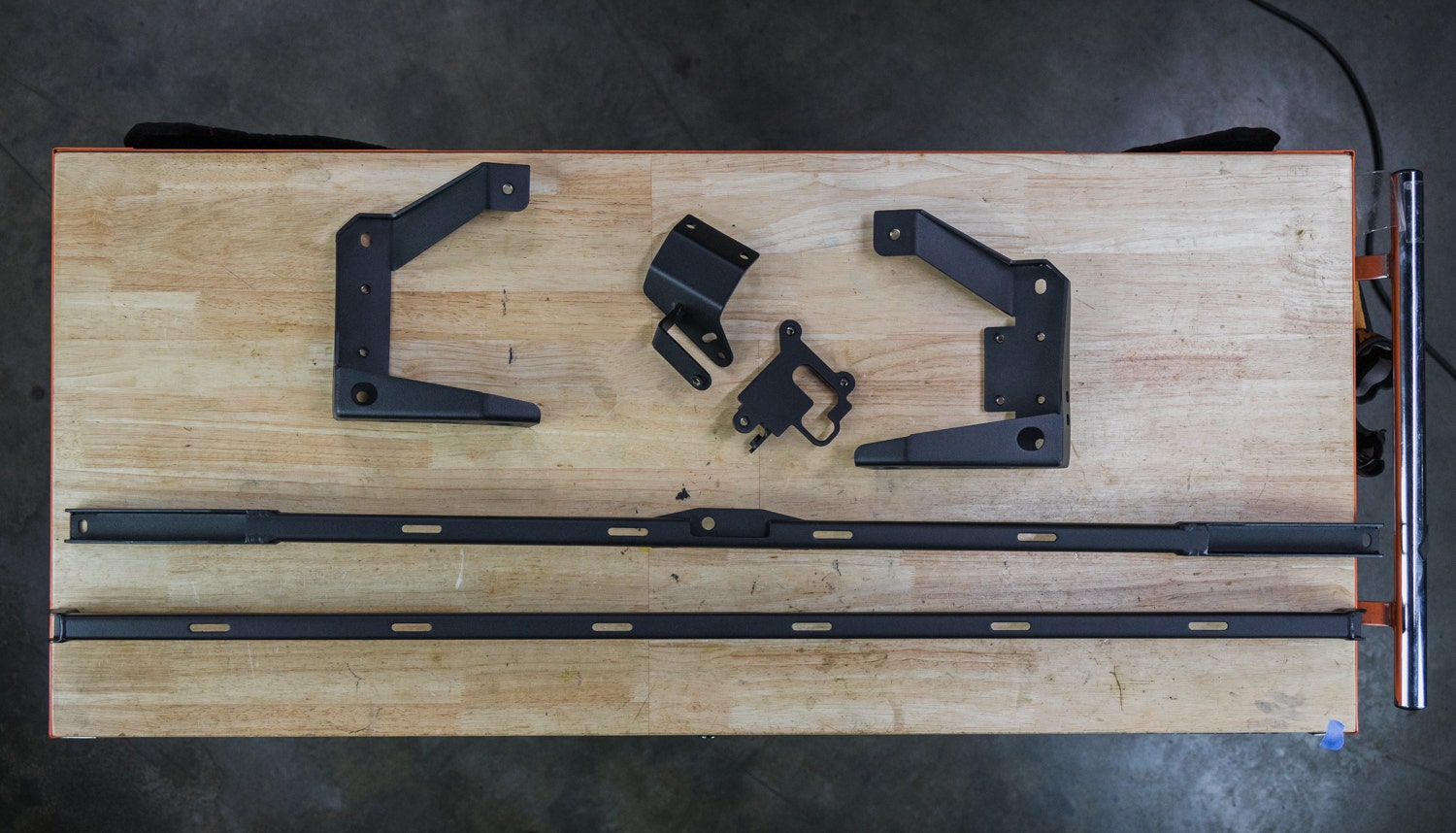
While it might not seem like it, any excursion in the Bronco is a team effort. From the driver’s seat, you’re just manipulating the throttle and steering while generally making smart decisions, but the brigade of electronics, sensors, and hardware supporting the EcoBoost powertrain strapped to this modern off-roading chassis all work in perfect harmony to go over any terrain. Teamwork is, in fact, making the dream work. The same could be said regarding the Bronco’s intercooler re-homing process. Our fresh high-mount intercooler design might be the show’s star, but it turns into a fancy paperweight without its literal supporting cast.
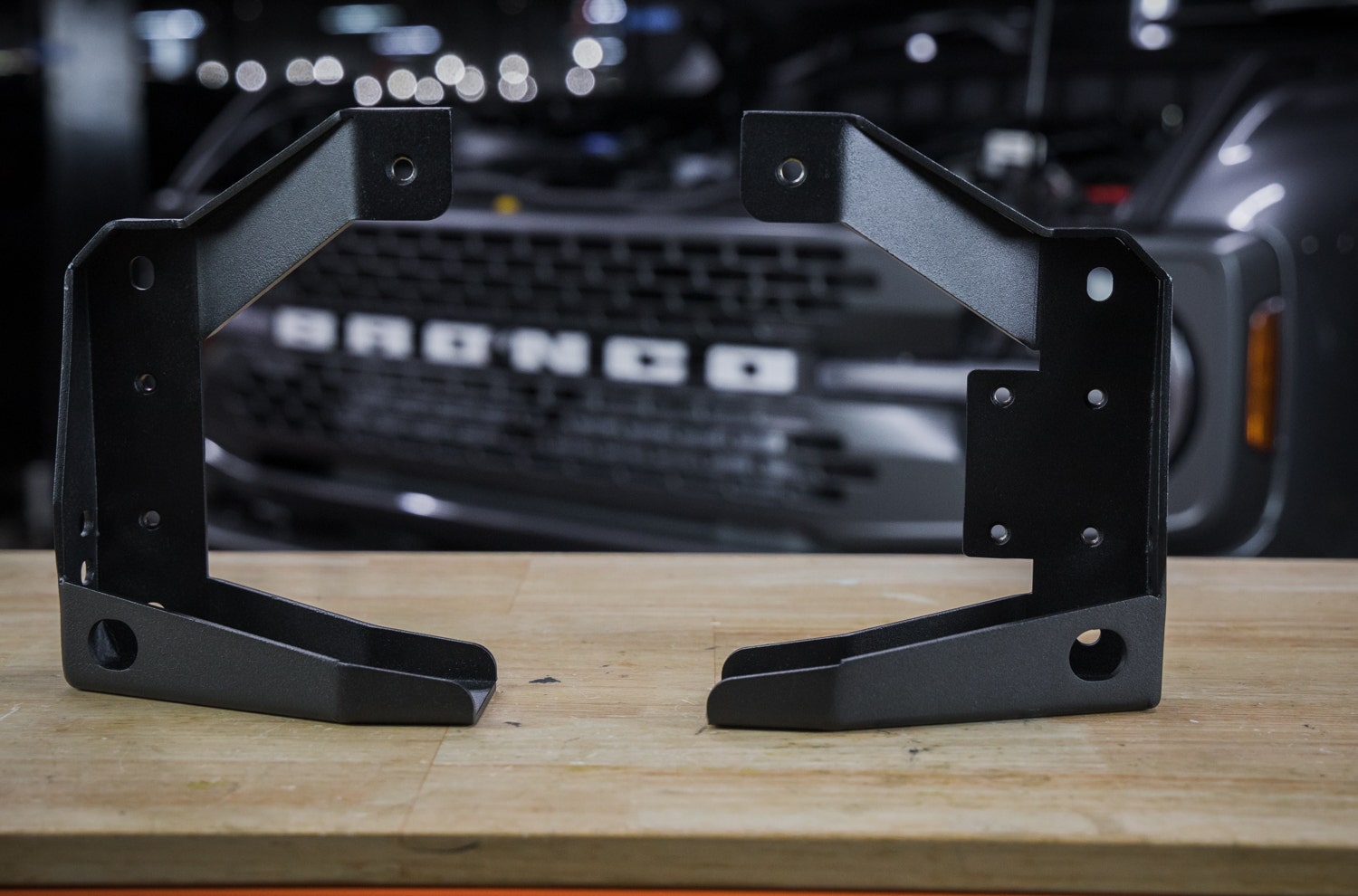
When we last left off, our sleek intercooler was finding its new home behind the Bronco’s upper grill, but with the help of our rusty prototypes. After some tweaks and finishing touches, our final bracket set is in the R&D facility and ready for the road.
Our driver’s side support also includes mounting provisions for our adjustable adaptive cruise control
The right gear is essential to any adventure. This, in turn, makes any adventure the perfect excuse to upgrade your load-out, and who doesn't like to have the latest and greatest equipment? The same could be said about the rig that promises adventure-ready status at all times. While Ford made sure to load these Broncos out with a diverse arsenal of off-roading bits, there were some aspects that we still needed that excuse to upgrade.
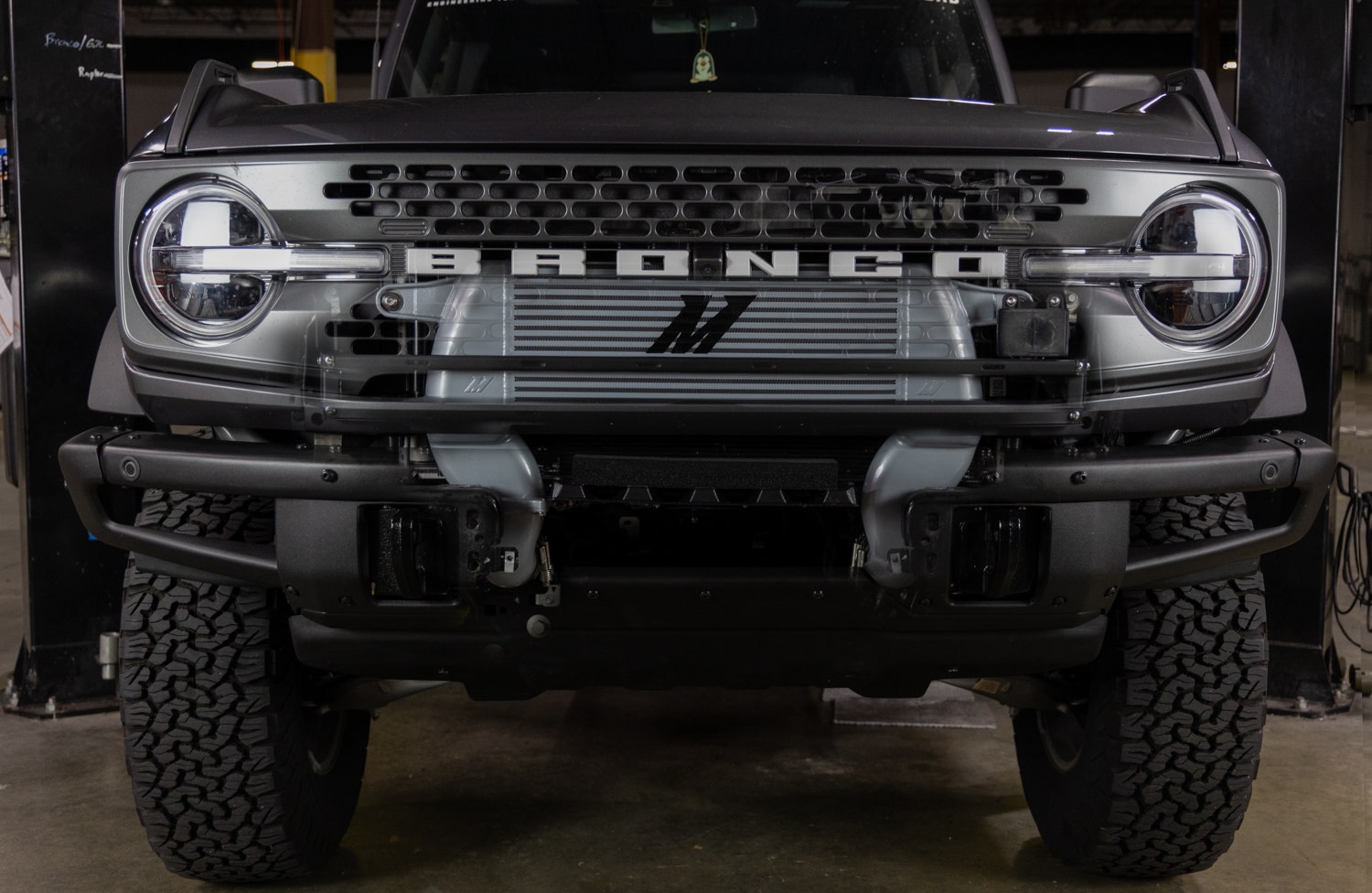
Just needing to move a component to clear space for more off-roading equipment is one best excuses to upgrade your systems, and we devised just the thing. This high-mounted intercooler is ideal for those looking to hide a winch or plotting to improve the Bronco's approach angle. Now that it's in the shop, we're stoked to show off this intercooler's final design and rehome it behind the upper grille.
Our high-mount design has really filled out since the metal skeleton we showed in the last post. The sheet metal frame and 3D printed end tanks have evolved to
Hitting the high road is not for the unprepared. This road less traveled is pocked with treacherous trenches and littered with rocky obstacles. While your Bronco is designed to glide over such tribulations, even the more hardened off-roader is still prepared for the eventuality that even Ford's mighty Bronco might get stuck. From training to shakedown trips, combined with the necessary recovery gear, man, gear, and machine make for the optimal off-roading team, and we want to make sure that your Bronco is ready for any excursion.
We take on the same concept here at Mishimoto as we make clearance for winches while improving your Bronco's performance. Relocating the intercooler, especially a vehicle with technology dripping from every corner, is complex, to say the least. Where our 3D scanning equipment and modeling software provide a scale virtual workspace for our engineers, nothing can top physically installing the design into the vehicle. So, to help streamline our process, we fired up
Ford's latest iteration of the Bronco is designed for the high road. Ford sidelined its purpose-built off-road machine for quite some time but wanted to ensure that the return of such a legendary model would tackle the wilderness with ease and better than the stiff competition. Ford put mountains of thought and engineering into the modern Broncos to earn the true meaning of G.O.A.T. mode. Even after the extended time spent engineering the Bronco's return, a few aspects could leave the Bronco in the dust, precisely when it comes to the intercooling system. Lucky for you, though, we're already on the case to ensure that your 2.3L or 2.7L's charged air temperatures are properly managed for true off-road domination.
Before we dive into our grand intercooler scheme, though, it's always a vital part of our R&D process to fully examine the OEM components. This process allows us to hone in on the aspects that need to carry over to our design and determine what desperately requires an upgrade.