mustang gt

  1. Stranger Danger - Baffled Oil Catch Can R&D, Part 3: Finishing Touches

    Stranger Danger - Baffled Oil Catch Can R&D, Part 3: Finishing Touches

    The prototype has been on our loaner GT for the past few months, working as it should and catching a nice amount of blow-by. The previous updates, covered how we used innovative tech to design and create the bracket, and the planned routing for the lines. Significant progress has been made since then, as the designs have taken a cleaner physical form.

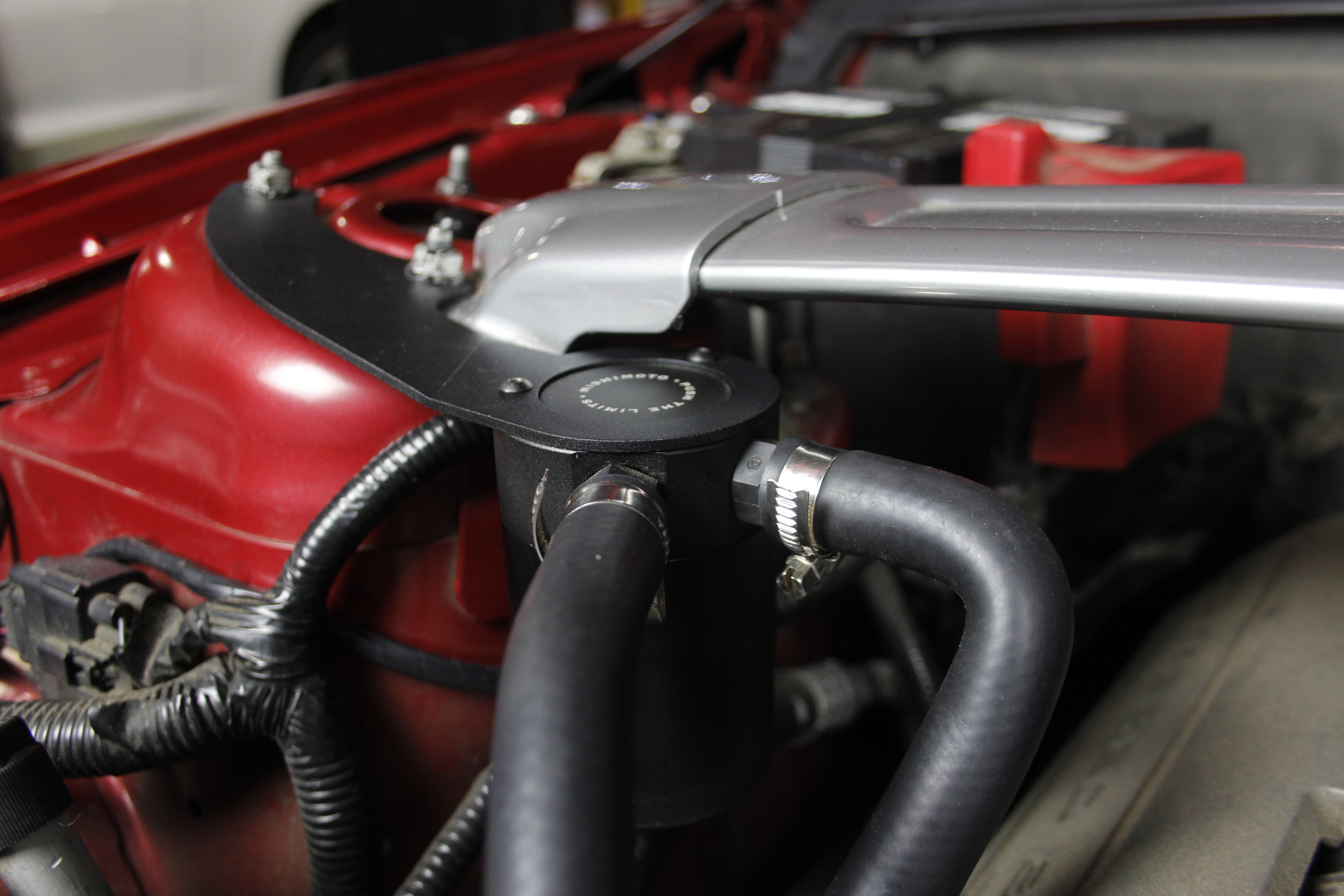
    Side shot of the completed kit
    Side shot of the completed kit

    Our sample production kit arrived at our R&D headquarters and it couldn't have fit any better. Everything was spot on and the installation was easy. You can see in the above image that we've cleaned up the catch can lines with properly routed hoses. The line material is rubber based, retaining a clean, OEM look.

    To keep this kit truly direct-fit, we will also include the quick-disconnect fittings for the PCV connections on the engine.
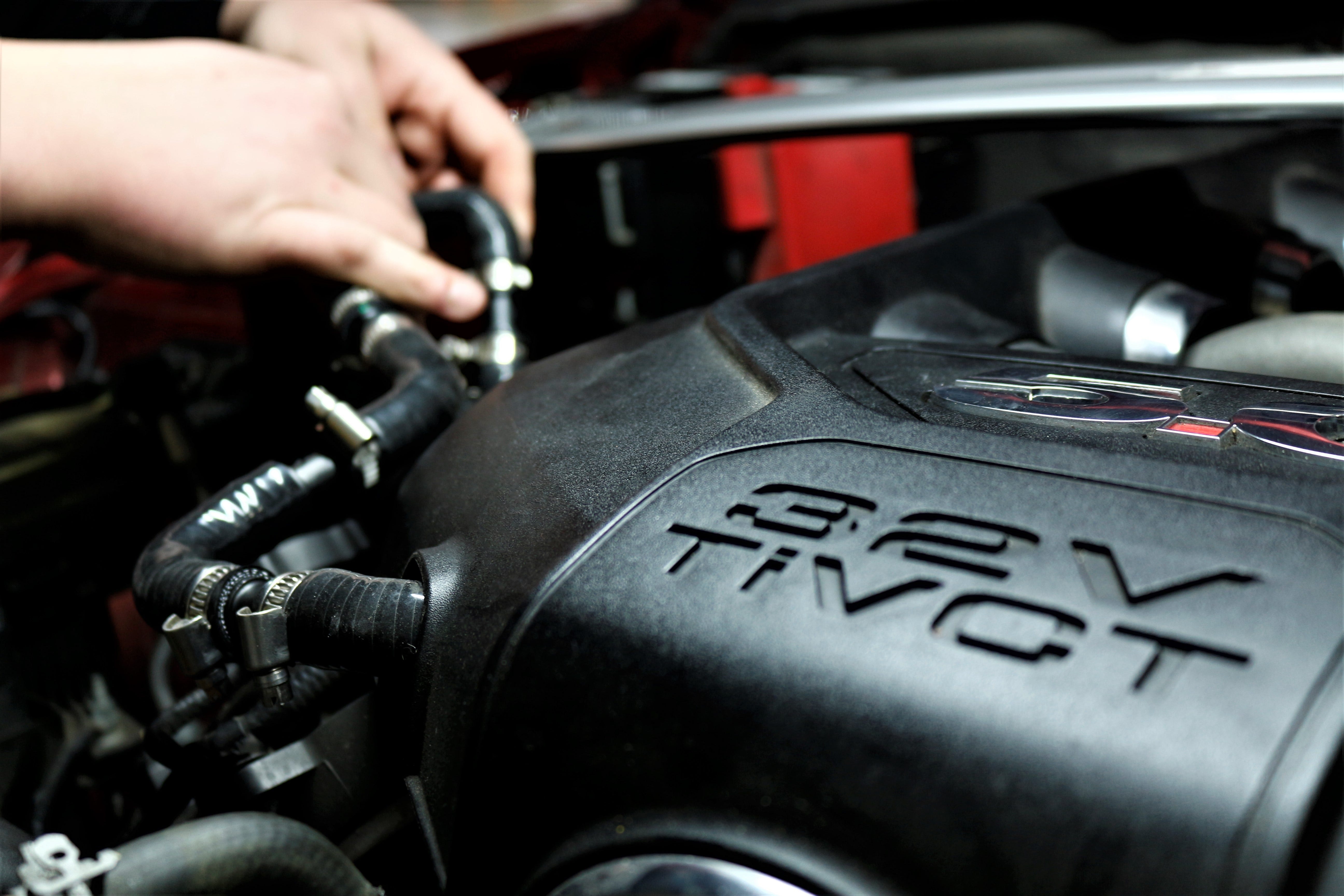
    Quick-disconnect fittings on our kit
    Quick-disconnect fittings on our kit

    So, it looks nice, but does it work? Well, after the prototype kit had been on the car for about 1000 or so miles, we had this GT come back

    Continue Reading »
  2. Stranger Danger - Baffled Oil Catch Can R&D, Part 2: A Canned 'Stang

    Stranger Danger - Baffled Oil Catch Can R&D, Part 2: A Canned 'Stang

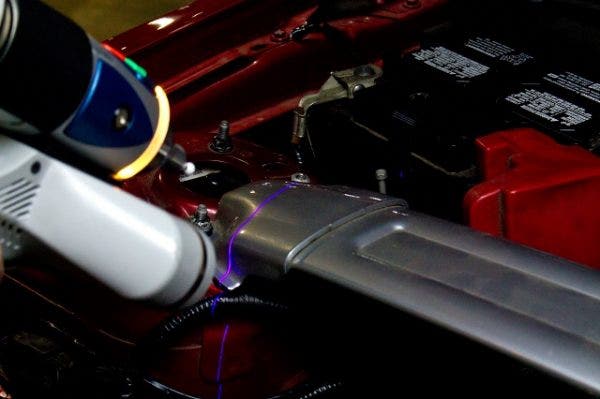
    Our engineer has advanced engineering tools at his disposal. Arguably, one of the coolest in our facility's arsenal is our scanning device. This high-tech piece of equipment allows our engineer to scan anything in 3D space into a computer file. The file is then uploaded to a computer so the engineer can design whatever they want within the 3D space they scanned. The fine-tuned hands-on engineering element is still there, it's just done a lot faster and just as accurate with this machine.  We call this contraption the Faro Design ScanArm and we have a full, detailed writeup on how it works. Cool technology aside, let's get into the design of this catch can kit.

    The scan-arm at work!
    The scan-arm at work!

    A peek at the resulting image file
    A peek at the resulting image file

    Every vehicle's engine bay components experiences vibration. It's automotive nature. But catch cans can't be subject to this rigorous shifting because the lines to each can port must remain in place, so we need to find a spot on the chassis that will have the least amount

    Continue Reading »
  3. The Mustang GT Intake R&D, Part 4: Seeing is Believing

    The Mustang GT Intake R&D, Part 4: Seeing is Believing

    Click here to get your Mustang GT Intake!

    As 2016 approaches its end, I can't help but reminisce. It's been a wild ride and a lot has changed. We have a new president-elect, the Olympics took place in Brazil, Kim Kardashian was robbed at gunpoint, Ryan Lochte lied about being robbed at gunpoint, and Leo finally got his Oscar. You know what hasn't changed? Our resolve to make awesome parts for our automotive community.

    It was May 3 when we announced that we were going to make an intake for the 2015 Ford Mustang GT. I know it feels like the updates for this project have been trickling in at a slow pace, but quality takes time. In our last update, we went through the rigorous testing our prototype endured, including pressure drop, dyno and road testing, so we could be confident in our results. The production sample has finally arrived at our R&D facility and it looks great. Our lead engineer has installed a finished production kit on our GT, so let's check it out!

    Here it is; the full kit!
    Here it is; the full kit!
    Continue Reading »
  4. The Mustang GT Intake R&D, Part 2: Prototype Design

    The Mustang GT Intake R&D, Part 2: Prototype Design

    We have some updates for our 2015 Mustang GT intake project! Our engineering team has been diligently working on a functional prototype so we can start getting some testing results. It's full steam ahead with our plan for this intake, which includes a cool design for a fully enclosed airbox, keeping the stock tune, and of course, gaining more power! Let's briefly examine what we have so far starting with the airbox, shown below.

    Prototype 2015+ Mustang Parts
    Prototype 2015+ Mustang Parts

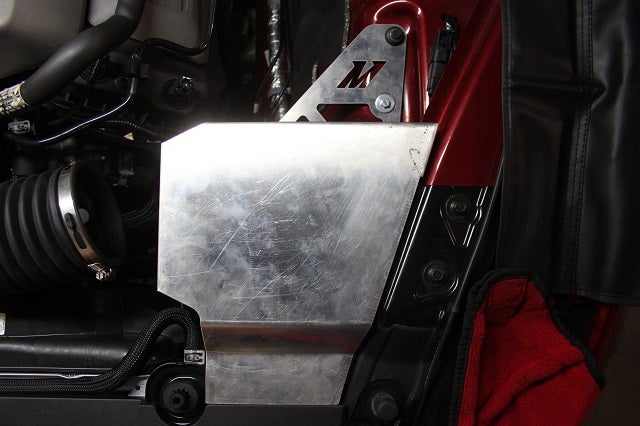
    In our design for the intake airbox, check out how the lid contours to the dip to the right side of the radiator; that's pretty slick! This airbox will grab air from the same location as did the stock intake airbox. Also take a look at how we designed our bracket! This was another opportunity to get creative with our designs. This entire airbox, including the brackets, were all cut using our waterjet. Fun-fact: For the water and abrasive material mix to cut cleanly through this steel, the water pressure shoots out at around 60,000 psi!

    Continue Reading »
  5. Upgrading Induction - Induction Hose R&D, Part 1: Design Elements

    Upgrading Induction - Induction Hose R&D, Part 1: Design Elements

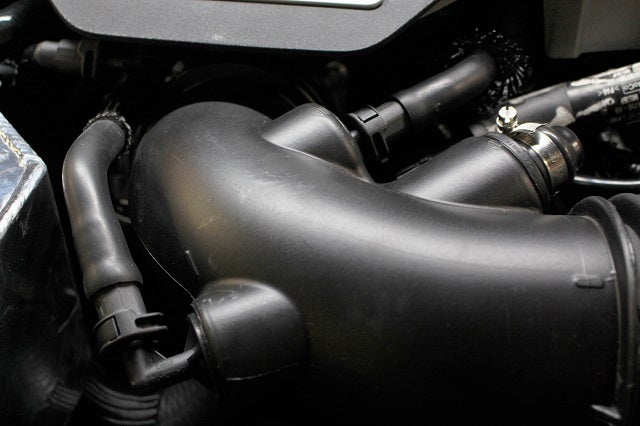
    Improving airflow is now a recurring theme for the stock 2015+ Mustang GT intake. In addition to finding air flow restrictions in our project to replace the entire stock intake system, we've also found several ways that a silicone induction hose for S550 drivers could improve airflow for drivers who would rather not replace their stock intakes. The stock piece is not only restrictive in size, but it also makes use of a resonator. We can make several improvements to take this induction hose design to the next level.

    IMG_5013r
    Stock 2015+ Mustang parts

    Stock 2015+ Mustang parts
    Stock 2015+ Mustang parts

    The hose itself is straightforward, except for the number of ports and attachments. We will be including those four ports in our design and will incorporate quick-disconnect fittings. Take a look at the image below.

    A look at the many port attachments
    A look at the many port attachments

    To increase the amount of airflow that can travel from the airbox, we must enlarge the entire tube. This will produce give us an increase in volumetric area inside the tube. Although

    Continue Reading »
  6. The Mustang GT Intake R&D, Part 1: The Stock System

    The Mustang GT Intake R&D, Part 1: The Stock System

    We've had our Mustang GT for a good while now, and it's time to begin our development of the performance intake. We'll begin by quickly dissecting the stock system and deciding on the direction we'd like to go with our design.

    Stock 2015+ Mustang GT intake
    Stock 2015+ Mustang GT intake

    The stock intake is fairly standard; from the center-mounted throttle body, the intake tube extends toward the driver side of the engine bay and incorporates the curved design that embodies the style of that classic V8 intake.

    Stock resonator and mass airflow sensor
    Stock resonator and mass airflow sensor

    Above is an image of the resonator. Most modern cars today have this part as a standard component attached to the intake system. Let's check out some shots of the intake system removed from the car.

    Stock 2015+ Mustang GT intake
    Stock 2015+ Mustang GT intake

    Stock 2015+ Mustang GT intake
    Stock 2015+ Mustang GT intake

    These stock 2015+ Mustang parts must compensate for the length of the front end of this car. Since this system is located some distance from the front end, the intake has a snout that grabs air right from the front grille.

    Continue Reading »